Here’s another colorful local tidbit that I was telling my cousin about tonight. Harry Gilmor – some people know him as the Baltimore City Police Commissioner during the 1870’s and subsequent Mayor of Baltimore – he was also elected colonel of the Maryland National Guard after the war. He was a Confederate Cavalry officer who used to plague the area because he was born at Glen Ellen in Warren (near Loch Raven Reservoir). his family owned slaves and were advocates for secession.
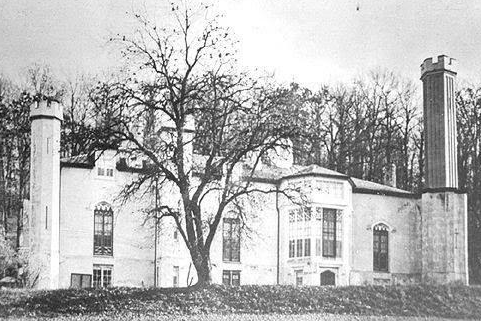
Glen Ellen – all that remains is the foundation, a spring house and a well. It was dynamited in 1929 after the area was flooded to create Loch Raven Reservoir.
He joined the Baltimore County Horse Guard – under Charles Ridgely (Hampton Mansion) and was promptly arrested after the Pratt Street riots and thrown in the prison at Fort McHenry. When he was released he went to Virginia and joined Turner Ashby’s unit – the 7th VA Cavalry (my 3rd great-grandfather’s unit) and was eventually put in charge of the 1st and 2nd Maryland Cavalry.
Gilmor raided all over the place – including in the Owings Mills area where he would come to commandeer horses. When the farmers in the area got wind that he was around – they would round their horses up and take them to the area near what is now the New Town Giant and ITT Tech and put an armed sentry with them to keep them from being snatched by the Confederate soldiers.
In July 1864 after the battle of Monocacy (CSA victory in case you’re counting) – General Early’s Cavalry Corp led by Johnson pushed east – back into Westminster. Gilmor’s Cavalry pushed the Union Cavalry out (again) and they chased the Union infantry troops into the Cockeysville/Hunt Valley area on their way to destroy railroad tracks and a bridge on the Northern Central line. They literally moved through Baltimore County relatively undetected and Gilmor even went home to visit family on the way. They got as far as Timonium/Lutherville and Johnson split the cavalry – sending half towards Point Lookout in an attempt to free prisoners. The other half he sent east with Glimor to Joppa and the Quaker Village of Jerusalem Mill in Harford County. The cavalry unit raided the general store there for supplies and food.
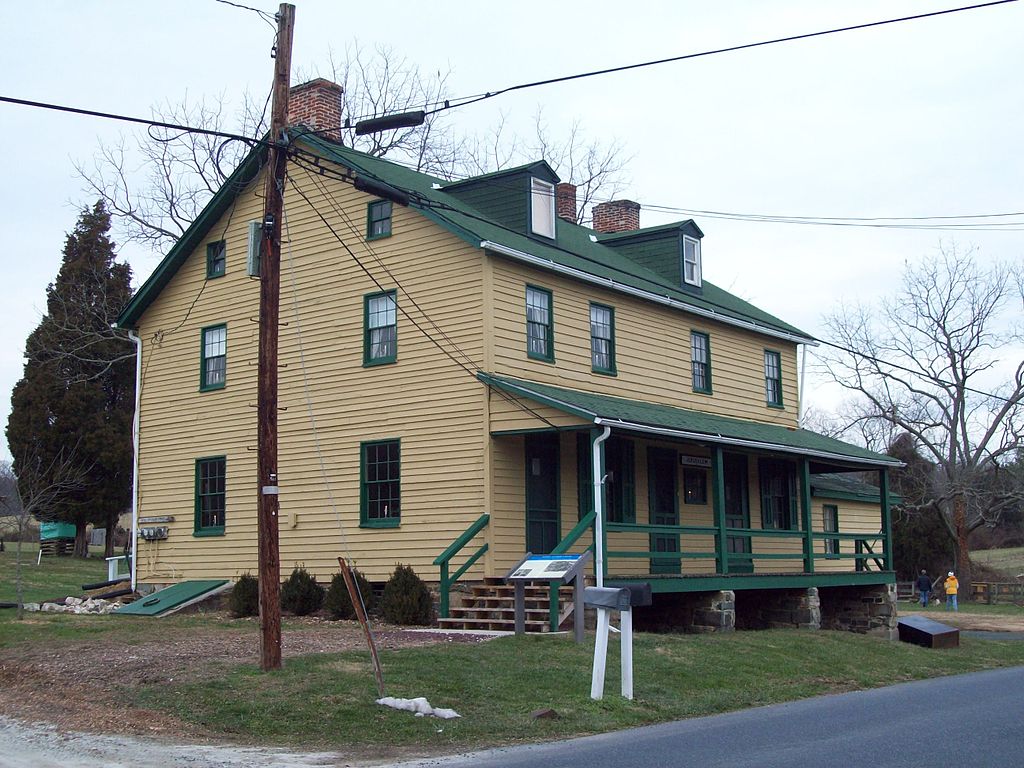
McCourtney’s Store in Jerusalem Mills – photo from Wikipedia 2009.
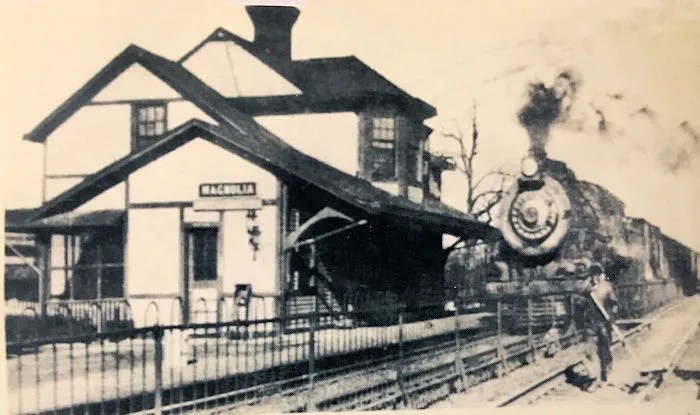
Old pic of Magnolia Station – photo from kilduffs.net
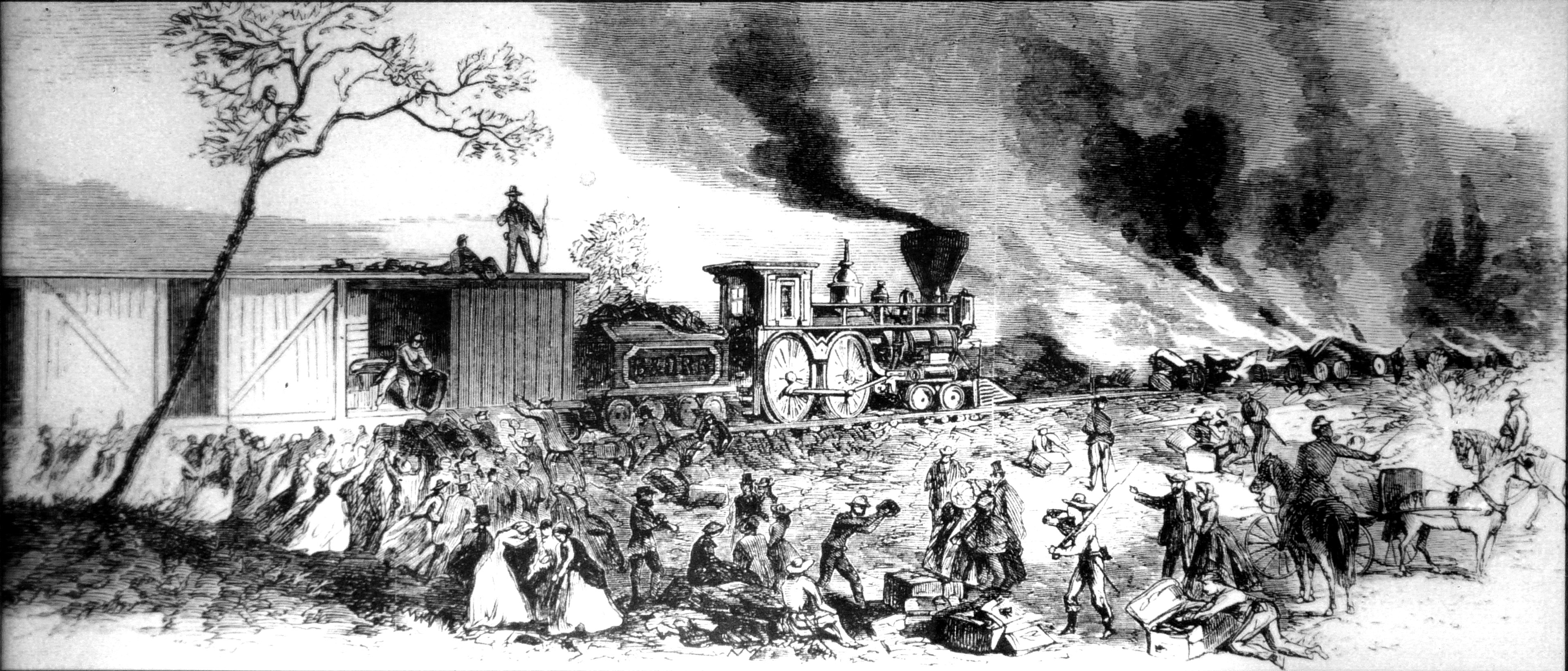
At the Gunpowder Bridge he captured and burned two trains, stole supplies, burned the bridge, cut the telegraph line and captured a wounded Union General who had been on the second train. He stopped the first train at the station and the enginer, smart man that he was, dismantled the controls. Gilmor burned this one because he couldn’t operate it. The second train had passengers as well in addition to the General Franklin, so they too were forced off, and then that train was set on fire as well and subsequently pushed back onto the Gunpowder Bridge which caught fire and burned as well. The span collapsed and the train landed in the river. The bridge had been guarded by Delaware Volunteers, Company F of the 159th Ohio National Guard and the Union gunboat, Juanita. The Union General, William. B. Franklin, had been shot in the leg at the Battle of Mansfield in Louisiana in Aptil of 1864. He stayed with his troops but because his condition progressively worsened, he was placed on medical leave and was returning home to York, PA to recover when Gilmor captured him.
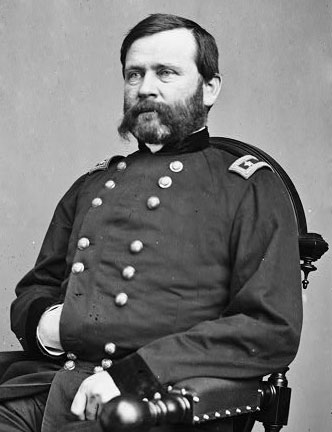
General Franklin – photo from Wikipedia
After this, Gilmore came back to Ady’s Hotel (now the 1920’s era Recher Theater) in Towson to rest and water his men and horses and meet with friends. Ady’s had figured in an episode earlier in the war – the owner flew the Confederate Flag when the war began,and the when the Union Army marched in on June 2, 1861, they found it necessary to take the town by force and siezed a cache of weapons from folks holed up in Ady’s. Gilmor encountered another Union Cavalry Unit detached out of Baltimore at Ady’s. He was outnumbered with only 135 men but defeated the unit anyway and chased them all the way down York Road to Govanstown – we’re talking Baltimore City now folks – Penn Lucy area – Greenmount Avenue and Old York Road. Unfortunately for Gilmor – his men were tired and his wounded Union General had escaped so he had to return to Greenspring Valley to attempt to retrieve him. Unsuccessful, he then headed west back toward the Potomac and Virginia. He stopped at the Craddock House after coming across Greenspring Avenue where he rested (Craddock Lane in Owings Mills and the old house) and then moved down toward the Seven Mile House in Pikesville (think Seven Mile Lane) and then moved towards Randallstown and then west from there to Bladensburg. He basically upset the entire state of Maryland on his little raid around Baltimore for 4 days. 136 men managed to scare the piss out of everyone they encountered; he avoided Union Patrols, and scared away the ones they did meet. He also managed to talk his way through a Union picket by stating that he was Union Cavalry out looking for himself. He only lost one man during the whole thing. It will be forever known as the Magnolia Station Raid.
He is buried in Loudon Park Cemetery on Confederate Hill. Gilmor Street is downtown is named after him and so is Gilmor Elementary. You can’t make this stuff up folks.

Below is an article published in the New York Times by a witness to the event. He was on the 2nd train, captured and burned by Gilmor. Despite assurances otherwise – they robbed everyone on the train.
Correspondence of the New-York Times;
FIFTH-AVENUE HOTEL, NEW-YORK, Wednesday, July 13, 1864.
I was among the passengers captured on the second train of cars captured and destroyed by a small band of rebel raiders, on Monday last, near Magnolia Station, on the north side of Gunpowder Creek, about twenty miles from Baltimore. It was the 7:30 express train from Washington, and numbered fourteen cars, some of them, however, not half-filled with passengers. On reaching the City last evening, and reading the telegraphic and other accounts of this characteristic feat of modern “chivalry,” and especially the encomiums bestowed upon the rebels engaged in it, I was a good deal surprised. I do not deny that in the mere matter of “deportment” these traitors might have been unexceptionable to Mr. Turveydrop himself. They were profuse in assurances, throughout, that neither private property nor private persons should be molested. All they professed to be after was property and persons of a public character -legitimate subjects of seizure and confiscation under the rules of civilized warfare. And in this respect there was no difference between officers and men. All alike were chivalric in “deportment” and all alike I have no sort of doubt, participated in the fruits of the thieving and robbery that followed and accompanied these professions of honorable purposes.
The truth is, the little squad of rebels at Magnolia was in nothing more honorable than a thieving and robbing raid, and cared less for doing damage to important public communications and capturing officers and soldiers of the Union, than they did for the plunder of carpet-bags and trunks. Not a foot of the railroad at that point was destroyed, nor, in burning two trains of cars, was either of the engines materially injured. The portion of the pile-track called Gunpowder Bridge, that was damaged, corresponds exactly with the length of the burning train that was forced upon it. In half an hour the interrupted telegraph line can be restored, and I was told by Mr. TILTON himself, the able and patriotic President of the railroad company, that three days is all that will be required to rebuild the “burnt bridge.” The chief occupation of Maj. GILMORE’s gallant command, at and around Magnolia, was breaking open and rifling trunks, valises, carpet-bags, boxes in care of Adams’ Express, containing delicacies for wounded and sick soldiers in rebel prisons, burning private dwelling-houses and barns, and, in the true Dick Turpin mode (but with not half the magnanimity of that highwayman,) stealing money, watches and even shirt and sleeve buttons from their defenceless victims. The capture of Gen. FRANKLIN, through the agency of a rebel Baltimore female, gives no color of legitimacy to their prceeedings. It was a mere accident. The transaction that better illustrates the objects of the raid, was the capture of a poor sailor boy, just discharged and on his way home, and the stealing from him of $800, and the robbing of an old man from Maine (returning from visiting his wounded and dying son) of every-farthing he had after purchasing his homeward ticket, and of another poor man of $250, his all!
The true history of this Magnolia raid is briefly this: The 9:30 mail train reached Magnolia about 10:30, its passengers were plundered, and the train set on fire. A few minutes later the Washington and New-York express train arrived and passengers and train received the same treatment — all under the loud rebel professions of honorable intentions, which seem to have attracted the admiration of certain reporters, but which proved to be but Dead sea fruit.
One reporter gravely says that Major GILMORE gallantly saved a car from the flames and dispatched it to Havre de Grace with the ladies and children! He did nothing of the kind. An application was made to one of GILMORE’s Captains for such an act of kindness and humanity, and was refused on the plea, explicitly stated, “You’ll tell on us!”
Reporters differ in statements as to the number of these gallant thieves, from 250 up to 5,000, (Herald of this morning,) the former, I thing being the minimum estimate. I venture to say, from my own observation and that of others, that at no time was there one hundred of them at Magnolia. An intelligent gentleman informed me that he took pains and time to count the horses, and could make out but eighty-three.
A party of female Baltimoreans deserve special mention. They were cordial rebel sympathizers. One of them, an elderly person, evidently belonging to good rebel society, took possession of the photograph and letters of the wife of a surgeon of the navy, and on his application to her for them, replied that he could only obtain them through the consent of Maj. GILMORE. Another, a part and pretentious Miss, calling herself and rejoicing in being called by the rebel officers KATE LEE, and asserted to be a relative of the traitor General of that name, not only fraternized in the most open and affectionate manner with a rebel Captain, (said to be a Baltimorean,) but lent herself in every possible way to give aid and comfort to the thieves. She pointed out-officers’ baggage to them, and with her own hands distributed boots and other articles from the trunk of the Navy Surgeon alluded to, among her rebel friends. In fact, she spared no pains to proclaim, both in word and deed, her active and hearty sympathy with traitors and treason. Her shameless conduct attracted universal notice, and, outside of her rebel associates, excited universal contempt. The indignant rebukes she received from loyal ladies of our captured party will be likely to remain in her memory quite as long as the endearments exchanged with her traitor friends.
I might cite many instances of individual suffering from this raid, to show its simply predatory character. One lady’s trunk, for example, was broken open and robbed of jewelry and valuables to the amount of between $3,000 and $4,000, and on representing her loss to one of the chivalric officers of the gang, she was told if she would point out the Thug who stole them he would shoot him on the spot! She might as well have attempted to point out his grandmother, and the officer well knew it.
But I have said enough. I will only add a “glory” to brave old ISHMAEL DAY, the true-hearted and indomitable patriot who so fearlessly executed the grand order of Gen. Dix: “If any man attempts to haul down the American flag, shoot him on the spot!” ISHMAEL DAY did this very thing, on the morning of the Magnolia arson and robbery, and in the face and eyes of armed rebels!
“ALONE he did it!”
I have that flag in my possession, the only “trophy” I brought from the field of larceny. Long may it wave and keep in honored remembrance the name of one of its bravest and truest defenders, ISHMAEL DAY, of Maryland!
C.
 Baltimore Through My Eyes